
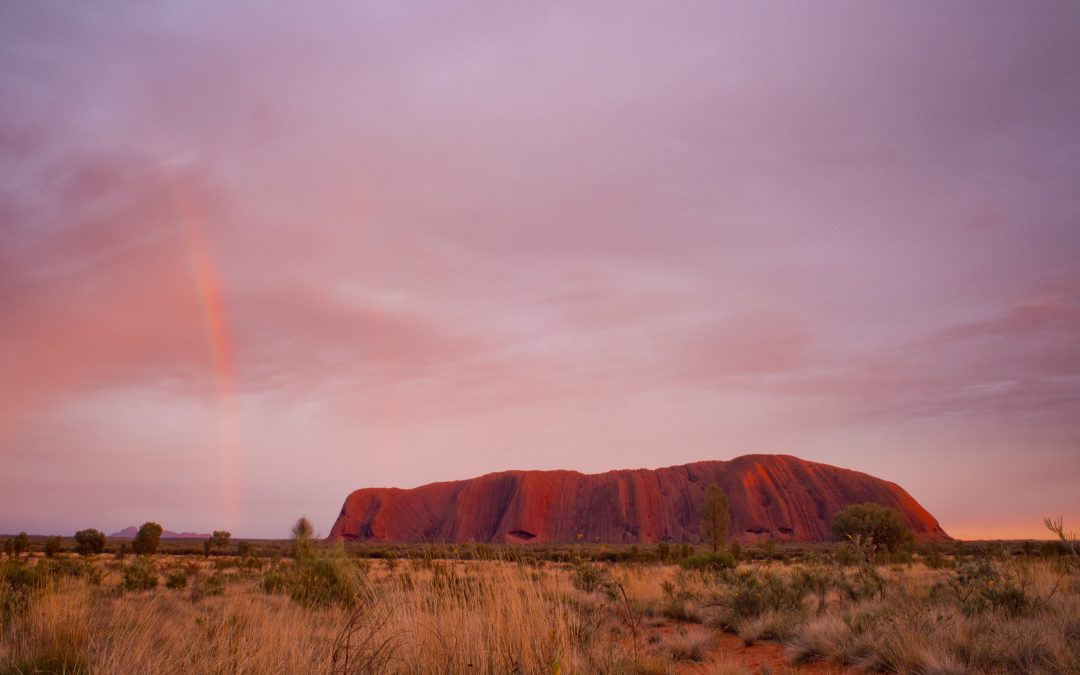
We plan journeys through Australia, New Zealand, and the South Pacific for a living, and if you asked us the one month to see the Australian outback, we would say July without hesitating. Here’s why. This is the dry season. The short, golden stretch when the desert cools, the skies clear, the tropical north drains after months of rain, and a country the size of a continent finally opens itself up to unhurried travel.
Come in the wet and the tropical north floods; come in July and the same roads, gorges, and reefs are at their best. For a slow, tailored trip across the Red Centre and the Top End, winter is the window we build around.
Quick Summary: Key Takeaways
- Dry season is the sweet spot: July brings warm, dry days and almost no rain across the Top End and Red Centre.
- Comfortable by day, crisp by night: Uluru and Kings Canyon sit in the low 20s°C for walking, with cold, star-filled desert nights.
- The Reef is calm and clear: Winter water means good visibility and gentle conditions on the Great Barrier Reef.
- Book ahead: July is Australian school-holiday season, so the best lodges fill early.
- We shape the route: The timing, the order, and the stays are what turn a big country into one seamless trip.
Why July Is the Dry-Season Sweet Spot
July is the heart of Australia’s dry season, and that changes everything. In the Top End around Kakadu and Darwin, days run to about 30°C with low humidity and next to no rain, according to Tourism Northern Territory. The bush tracks are open, the waterfalls are reachable, and the light is clean from dawn. Bone dry.
Down in the Red Centre it’s cooler still — pleasant enough to walk all day. That combination is rare. It’s the reason we point travelers here in winter. July earns it.
The Red Centre at Its Kindest
The desert is made for July. Daytime temperatures around Uluru and Kings Canyon hover in the low 20s°C, ideal for the base walk or the Kings Canyon rim, while the nights drop toward freezing and the sky fills with more stars than most people have ever seen.
We time the big walks for the cool of the morning. Then a long lunch. Then the light show at sunset, when the rock burns through every shade of red before the cold comes down.
The Top End Opens Up
As the floodwaters of the wet recede, the Top End becomes reachable again. Kakadu’s escarpments, plunge pools, and rock-art galleries are at their most accessible in the dry, and the wildlife gathers around shrinking billabongs where you can actually see it. This is the season the region was waiting for.
It rewards a slower pace. A few unhurried days beat a checklist every time.
Winter Is Quiet, Clear Water on the Reef
The Great Barrier Reef trades summer heat for winter calm. July brings milder air, gentler seas, and strong underwater visibility, and on the outer Ribbon Reefs it’s the tail of the season when divers come looking for dwarf minke whales. Fewer boats, clearer water, easy days.
We pair reef time with an island stay so the ocean is your backyard, not a day trip.
Why We Travel the Outback Slowly
Australia is enormous, and the mistake most first-timers make is trying to see all of it. Don’t. Two or three regions, connected well and given room to breathe, will stay with you far longer than a blur of flights and early checkouts.
We’d rather give you Uluru at dawn and the Reef at its calmest than a passport full of stamps. Depth beats distance. That’s the whole idea of a tailored journey.
How We Shape a July Journey
A good winter trip through Australia is really about sequence — which region first, how the flights connect, where the light and the timing land. That’s the part we handle. We match the season to your pace, book the lodges that get snapped up early, and build the days so nothing feels rushed.
Tell us what moves you — desert, reef, wine, wildlife — and we’ll turn it into one journey that flows.
Frequently Asked Questions
Q: Is July a good time to visit Australia?
A: For the outback and the Reef, it’s the best time. July is the dry season: warm, rain-free days in the Top End, mild days in the Red Centre, and calm, clear water on the Great Barrier Reef. Just book early — it’s also the Australian winter school-holiday peak.
Q: How cold does the Red Centre get at night in July?
A: Cold. Daytime around Uluru is a comfortable low 20s°C, but desert nights in July can fall toward freezing. We pack the itinerary with warm layers in mind and time the walks for the gentler hours.
Q: Can you visit the Great Barrier Reef in July?
A: Yes, and many divers prefer it. Winter brings calmer seas and good visibility, and June–July is the window for dwarf minke whale encounters on the outer Ribbon Reefs. The water is cooler, so a wetsuit makes the day.
Q: How many regions should we combine in one trip?
A: Two or three, no more. Australia is vast, and a slower route — say the Red Centre and the Reef, connected well — beats a rushed loop. We design the sequence so the travel days disappear into the trip.
Let Us Build Your July in Australia
July is the month we love planning most Down Under — the desert kind, the Reef calm, the whole country dressed for its best season. When you’re ready, we’ll shape it around you.
Start with our luxury Australia journeys, stand beneath Uluru in the Red Centre, slip out to the Great Barrier Reef, or browse the experiences we weave in. See how we work, then tell us your dates and we’ll begin.